


In an era of digital nomads and home offices, a desk is no longer just a functional surface for a laptop. For men who value quality, it is the "command center" – a physical extension of personal style and individual standards.
We all know this feeling: an inexplicable attraction emanating from certain objects. Why do some surfaces feel as refined as a hand caress, while others simply seem cheap? Why does a certain "weight" subconsciously signal reliability? This is no magic – it is a precise interplay of sensory stimuli and brand psychology.
1. Touch, Visuals, and Sound: A Feast for the Senses
The warmth of the grain: Unique, natural patterns offer a visual depth that lets the eye "breathe." A finely sanded surface provides a matte, tactile resistance that, through its grounding effect, can even help reduce work stress.
The logic of surfaces: Whether sandblasted or oxidized – the finish determines how light plays. High-quality processes create a soft, satin matte sheen and avoid the "intrusive" look of cheap materials. This light, cool texture under the fingertips is the essence of modern industrial aesthetics.
The acoustics of quality: When you set down an object, a rich, dull thud is far more satisfying than a hollow, sharp clatter. This acoustic feedback lets your subconscious decide whether an object is "premium" or just a placeholder.
2. Why "Weight" Builds Trust
This is evolutionary: In nature, denser, heavier objects are usually more stable and durable. On your desk, this weight translates into physical trust. A massive stand not only stays in place; it signals a brand’s obsession with structural integrity. When an object feels substantial, it is no longer a "disposable item" but real "equipment" built to last.
3. The Bastion 510: A Bold Step Toward Furniture Art
With the Bastion 510, we have erased the boundary between office accessories and high-end furniture. We wanted to bring decorative aesthetics back to the workplace.
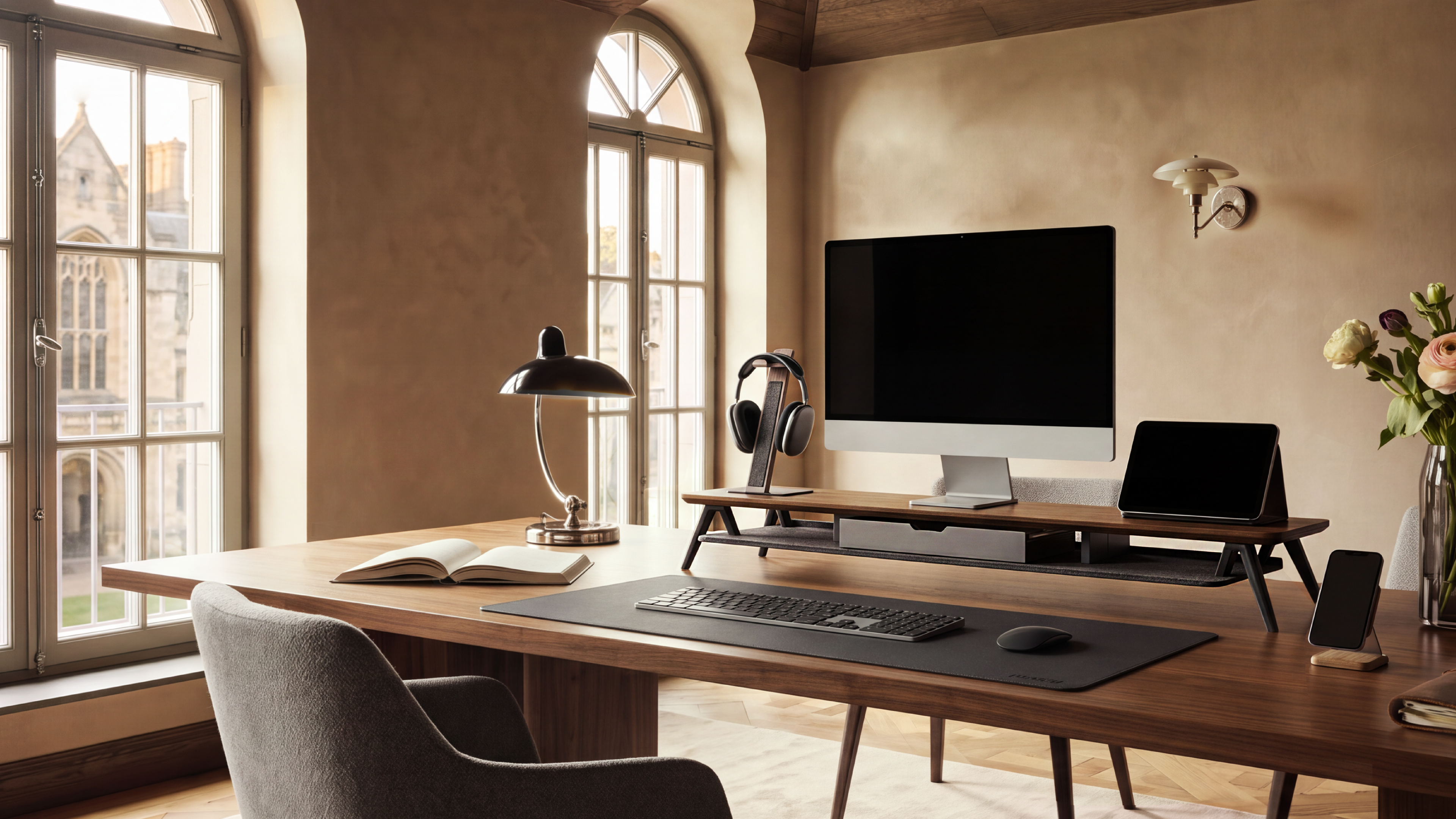
Fusion of textures: The Bastion 510 offers more than just a one-dimensional experience. It boldly combines a rigid, cool structure with warm, natural grains and a soft, smooth covering. This creates a rich "touch landscape" for hands and eyes.
Standards from furniture making: We have left behind the typical plastic look of office items and drawn inspiration from luxurious home design. Every seam and edge adheres to the strictest tolerances, ensuring visual calm and order.
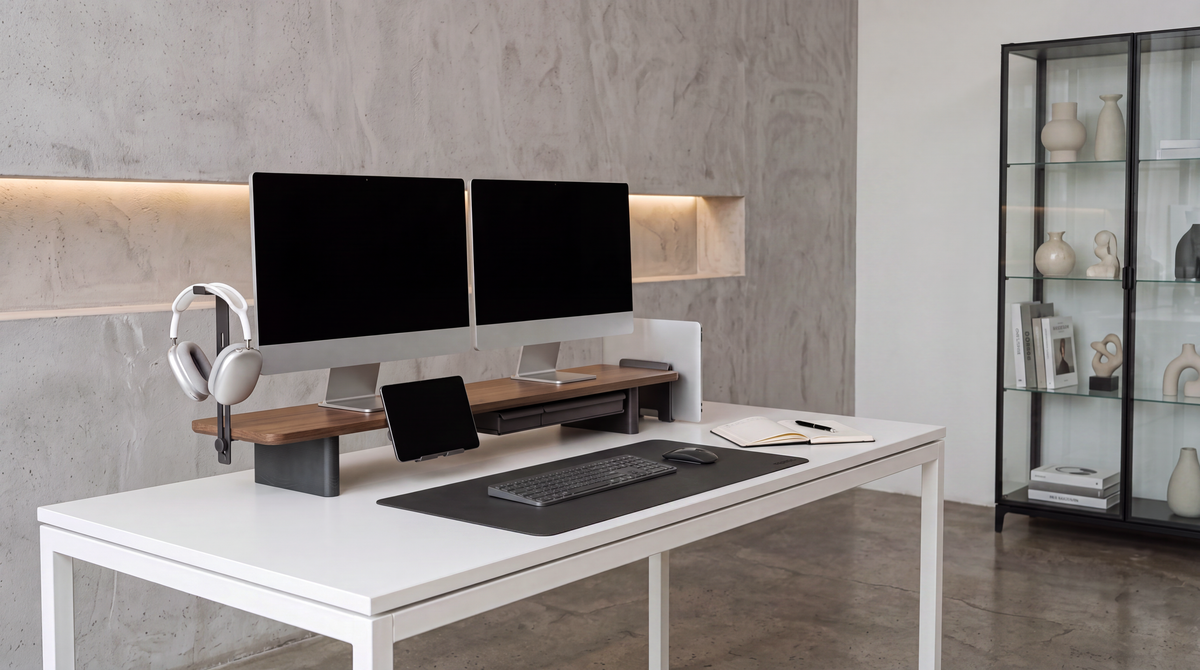
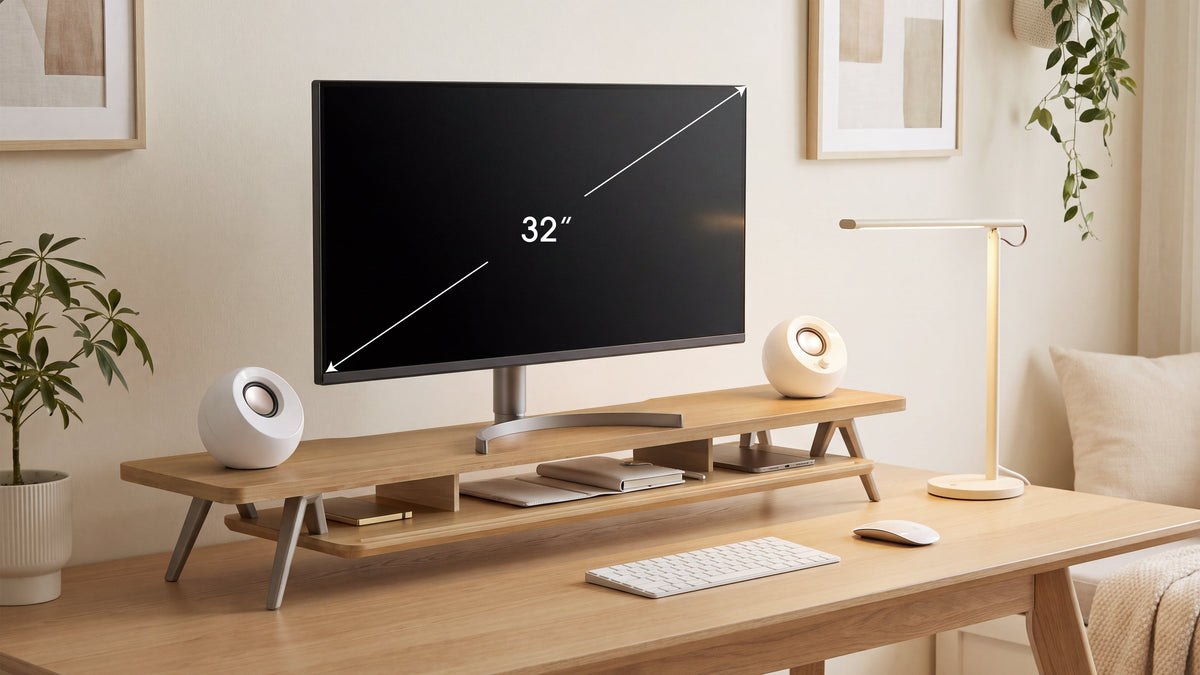
The architecture of the space: With dimensions of 42.5 x 9.8 x 6.1 inches, the Bastion 510 is more than just a riser – it is a piece of desk architecture. The two-level design (with a 2.8-inch gap) provides the necessary vertical depth to hide keyboards, laptops, or audio interfaces. This keeps your setup focused and clear.
4. Tips for Tight Budgets: How to Recognize Quality
You don’t have to replace your entire desk to upgrade your setup. Here’s how to find quality without breaking the budget:
Set a "texture anchor": Invest first in the object you touch most often. A high-quality base or tray sets the tone for the rest of the desk.
Pay attention to edges: Look at the chamfers (bevels). Soft, even transitions indicate precise machine processing and attention to detail.
Avoid "high gloss": Opt for matte or satin finishes. Shiny surfaces often look cheap and attract fingerprints and scratches.
Choose visual calm: Keep materials and colors consistent. Deep, muted tones usually appear more professional and trustworthy than bright colors.
Conclusion: A man’s desk is the territory of his logic and taste. Choosing a piece like the Bastion 510 is more than just an organizational solution – it is a statement about your work and lifestyle.
Share:
Ritual × Stärke: The Philosophy of the Desk Ritual for Men
One Desk, One System: The Desk of an Efficient Man Is Never Just Made Up of